Travel guides · Weather
Krabi is tropical year-round — warm, humid, and capable of surprising you with sunshine in July or a downpour in January. This guide explains how the seasons usually work, what that means for scooter riding, and why the so-called rainy season is not necessarily a reason to stay away.
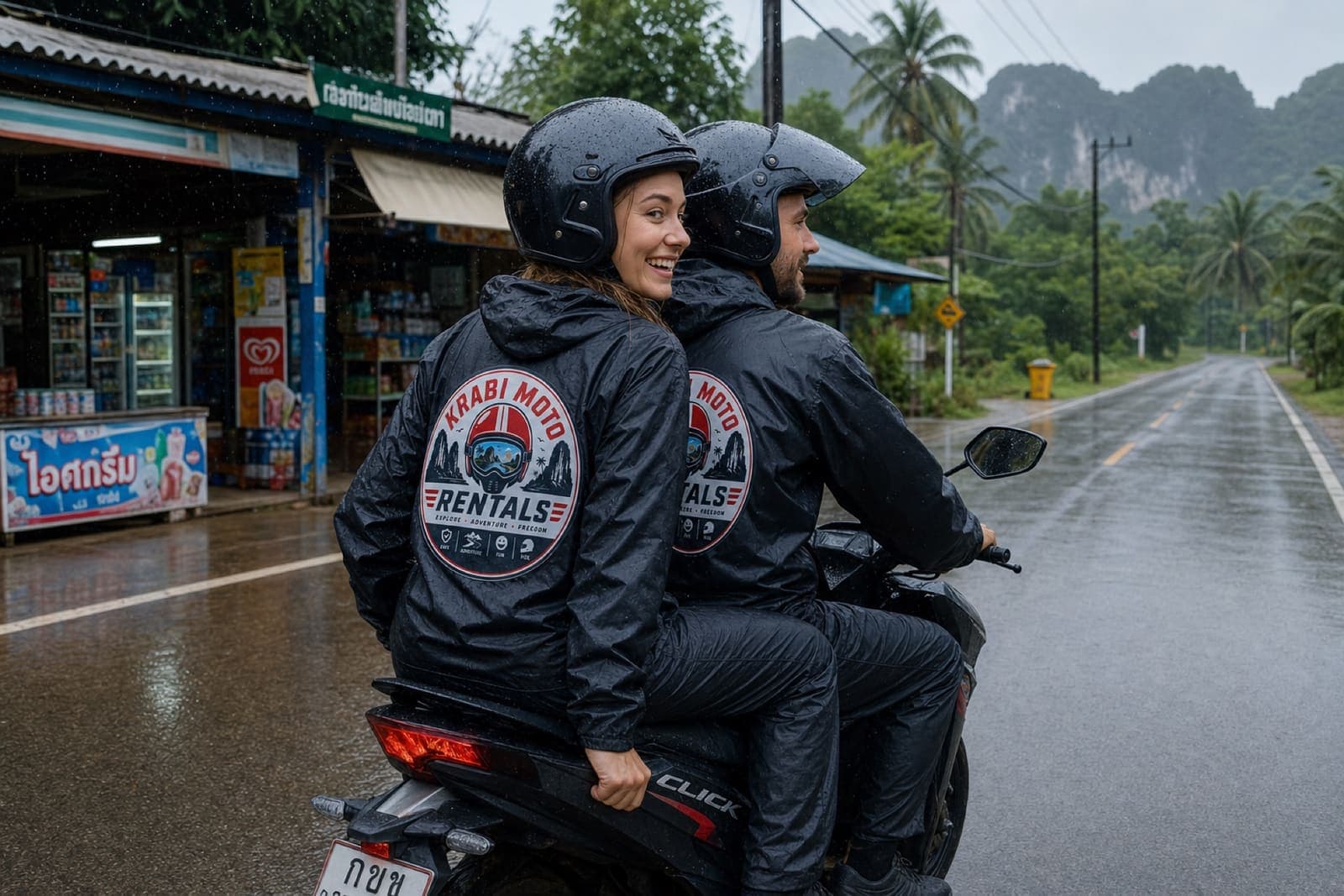
Rain rarely ruins a whole day — find shelter, wait it out, and always ride slow and careful when the road is wet.
These are **typical patterns**, not guarantees. You can get rainy days in January and beautiful sunny days in July. But over the year, this is how Krabi usually behaves.
May – October
November – April
These months are a **rough barometer**, not a contract with the sky. Always check conditions on the day you ride — especially for longer trips inland or over hills.
The rainy season gets a bad reputation — but for many visitors it is actually a pleasant time to be here. Temperatures are cooler than in the hot dry months, and there are far fewer people in the area.
Hotels are typically cheaper, restaurants and beaches feel less packed, and from our side, most bike models are available most of the time. You are not competing with the same booking pressure as November through April.
It is also, in our opinion, often the better season for photography. When rain falls, it pulls dust and haze out of the air. In dry season, fine dirt particles can hang over large areas — a blurry, hazy look that shows up in drone shots and landscape photos. After a good monsoon shower, the air is often crystal clear.
From November until April, demand is at its peak. We receive so many bookings and requests that we are fully booked at times — sometimes for days at a stretch on popular models.
If you are travelling in high season and have your heart set on a specific scooter or motorcycle, please contact us before you arrive so we can reserve it for you. Do not assume your preferred model will still be available when you land.
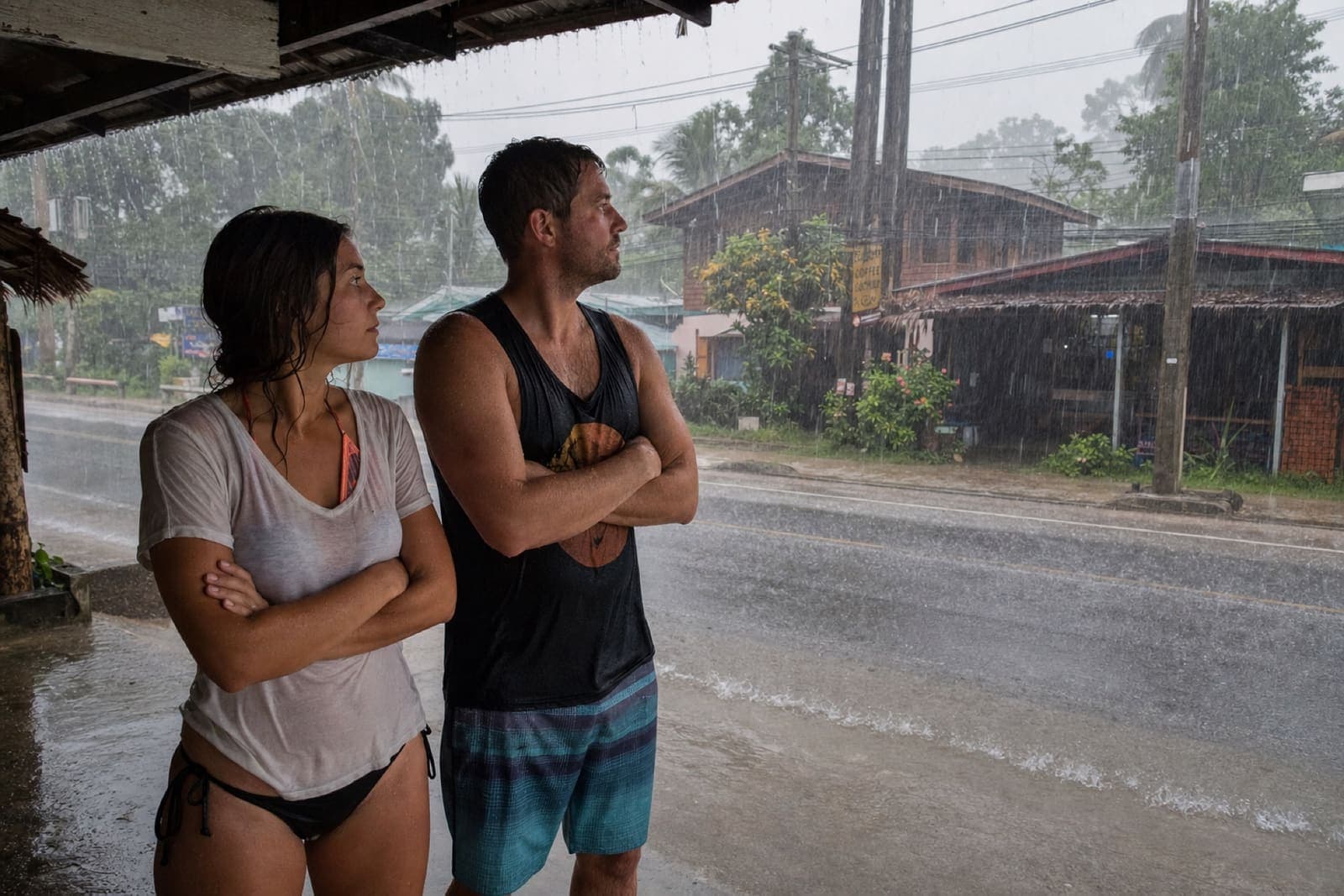
Tropical rain in Krabi is usually **heavy but short** — it does not have to wreck your whole day.
When a shower hits, find any shelter you can: a shop awning, the front porch of a house, a petrol station, or a covered parking area. Wait it out — most heavy storms last 30 minutes to two hours.
Even toward the end of a storm, the rain is often light enough that you can ride through it if you need to — but always ride slow and carefully on wet roads. Grip is reduced, painted lines and manhole covers are slippery, and puddles can hide potholes.
For our full safety advice — including night riding and stopping distances — see our Safety guide.
Rain gear is available at 7-Eleven stores and many local convenience shops across Krabi. Cheap plastic ponchos and suits work in a pinch — but they are incredibly thin and usually tear or flap apart once you are moving faster than about 30 km/h.
We offer branded two-piece rain gear sets for customers who want proper protection. These are a separate jacket and trousers — full coverage for your legs, feet, and upper body. A much more thorough setup than a single thin plastic sheet.
If you would like to purchase a rain gear set from us, let us know when you book and we can have one ready and waiting when you arrive.
Pros: Cheap, available everywhere, fine for a quick dash
Cons: Thin plastic, tears easily above ~30 km/h, limited coverage
Pros: Jacket + trousers, stays on at riding speed, proper wet-weather coverage
Cons: Purchase in advance — ask us when booking
The climate is changing — we have all felt that in our own parts of the world. Krabi is no exception, and we have to adapt rather than pretend historical averages never move.
May until October as monsoon season and November until April as hot and dry season remain a useful rough guide — but they are not fixed rules. We have had rainy stretches into January some years, and very sunny June, July, and August months for many years running.
Treat season labels as planning hints, not promises. Pack for sun and rain regardless of the month, build flexibility into longer rides, and check the sky on the morning you set out.
Dry season haze — dust and fine particles lifted from roads and fields — can put a milky veil over landscapes. Drone photography and wide scenic shots often look softer or flatter because of it.
Monsoon rains settle that dust back to the ground. After a storm, visibility can be dramatically better. For photographers and anyone who wants sharp, vivid views of limestone karsts and coastline, rainy season is often the better window — even if you carry an umbrella.
Tell us when you are visiting and which bike you want — we will confirm availability for your season.
