Beaches
Limestone cliffs, long-tail boat access only — Railay West, Phra Nang, climbing and a car-free beach day after you park your scooter on the mainland.
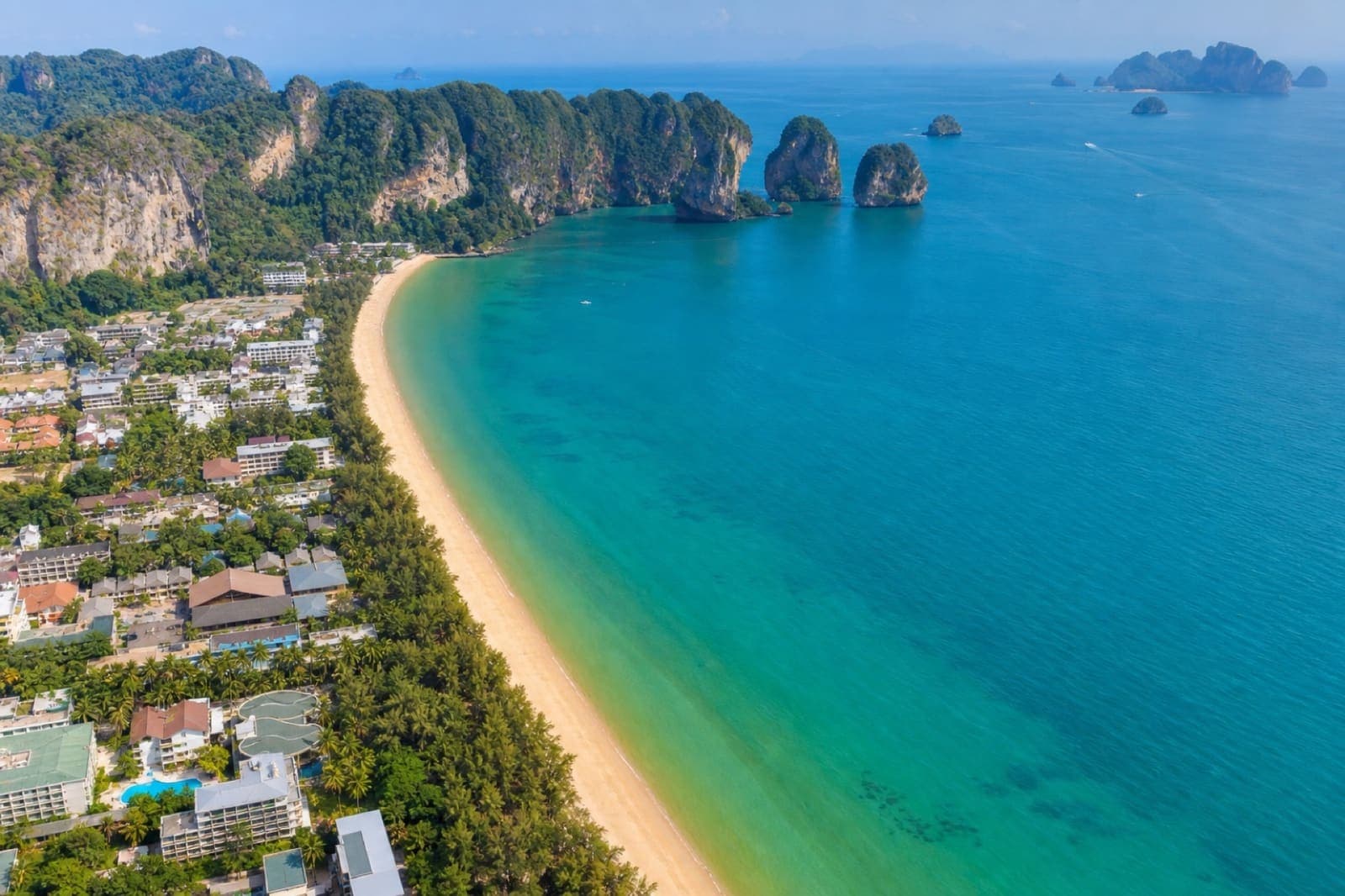
The Railay Peninsula is one of the most remarkable destinations in Krabi Province. Surrounded by the Andaman Sea and enclosed by enormous limestone cliffs, Railay feels like a remote tropical island even though it is physically connected to mainland Thailand.
There is no public road leading into Railay. The cliffs and jungle separate the peninsula from the surrounding road network, meaning visitors must arrive by boat. Once you step ashore, the entire area is explored on foot. There are no rental scooters, motorbike roads or normal cars carrying tourists between the beaches.
This makes Railay an excellent destination to combine with a motorbike journey around Krabi. You can ride to Ao Nang or Ao Nam Mao, park your motorbike on the mainland and complete the final part of the journey aboard a traditional long-tail boat.
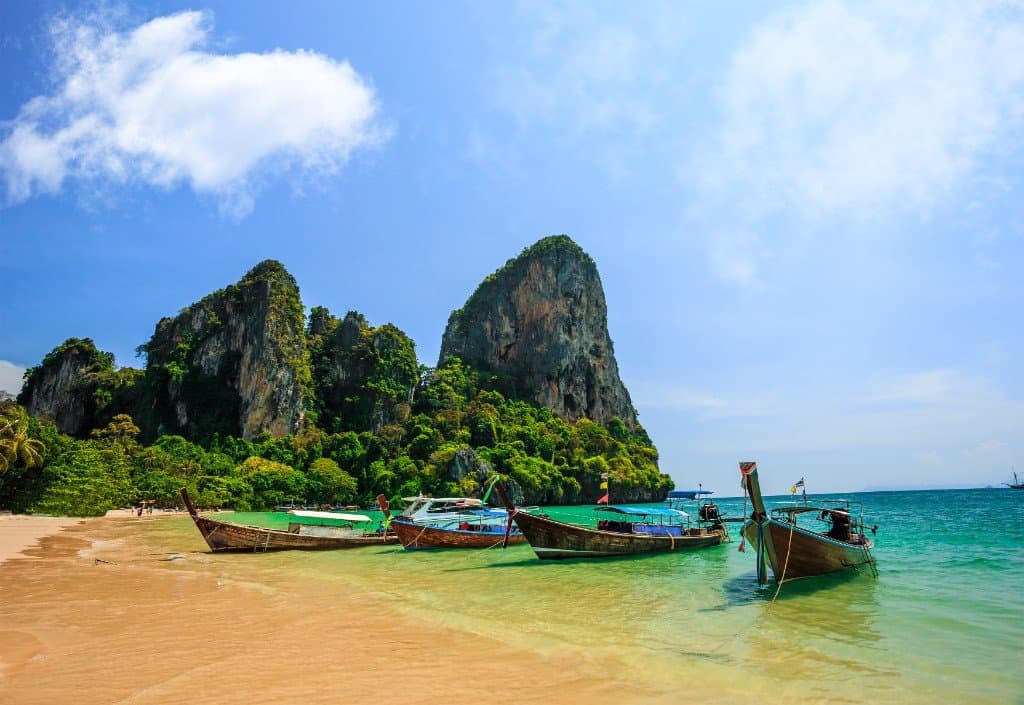
For most visitors staying in Ao Nang, the easiest route is the long-tail boat from Ao Nang Beach to Railay West. Boats leave from the beachfront and normally take approximately 10–15 minutes, depending on sea conditions.
Rather than operating like a large scheduled ferry, the daytime long-tail service often works as a shared boat system. Passengers purchase tickets and wait until enough people are ready to depart. During busy periods, boats may leave frequently. During quieter periods, passengers may need to wait longer or pay for a private boat.
Published ticket services commonly list shared operations from approximately 8:00 a.m. until 6:00 p.m. Later trips may sometimes be arranged, but travellers should not assume that a regular shared boat will always be available until 8:00 p.m. Evening services can depend on passenger demand, weather and the willingness of a boat operator to make a private trip.
Ao Nam Mao Pier is another useful mainland departure point, particularly during periods when sea conditions make the open-beach departure from Ao Nang less convenient. Boats from Ao Nam Mao generally arrive on the eastern side of Railay.
Because Railay has no connecting road, you cannot ride your motorbike onto the peninsula. The practical solution is to leave it on the mainland.
Motorbike parking can usually be found around the central Ao Nang area, near the beachfront and within walking distance of the long-tail boat ticket points. Parking may also be available near Ao Nam Mao Pier. Availability, security arrangements and parking fees can change, so riders should follow local signs and use an authorised parking area rather than leaving a motorbike in an unsuitable roadside location.
Before boarding the boat, remove valuables from the motorbike, lock the steering and take the key with you. Travellers carrying helmets may either bring them to Railay or ask their rental company whether helmet storage is available.
The important point is that a motorbike remains extremely useful for reaching the boat departure area and exploring the rest of Krabi. However, once you arrive at Railay, you will be walking for the remainder of your visit.
Railay is compact enough to explore on foot. Walking paths connect Railay West, Railay East and Phra Nang Beach, with restaurants, resorts, shops and climbing businesses positioned along the way.
The walk between Railay West and Railay East generally takes only a few minutes. Reaching Phra Nang Beach takes longer, but it is still an easy walk for most visitors. Parts of the route pass beneath limestone overhangs where visitors may occasionally see monkeys.
Tonsai Beach is slightly more separated. It may be reached by boat, by walking around the rocks from Railay West when conditions allow, or by following a land trail. The safest and most comfortable route depends on the tide and weather.
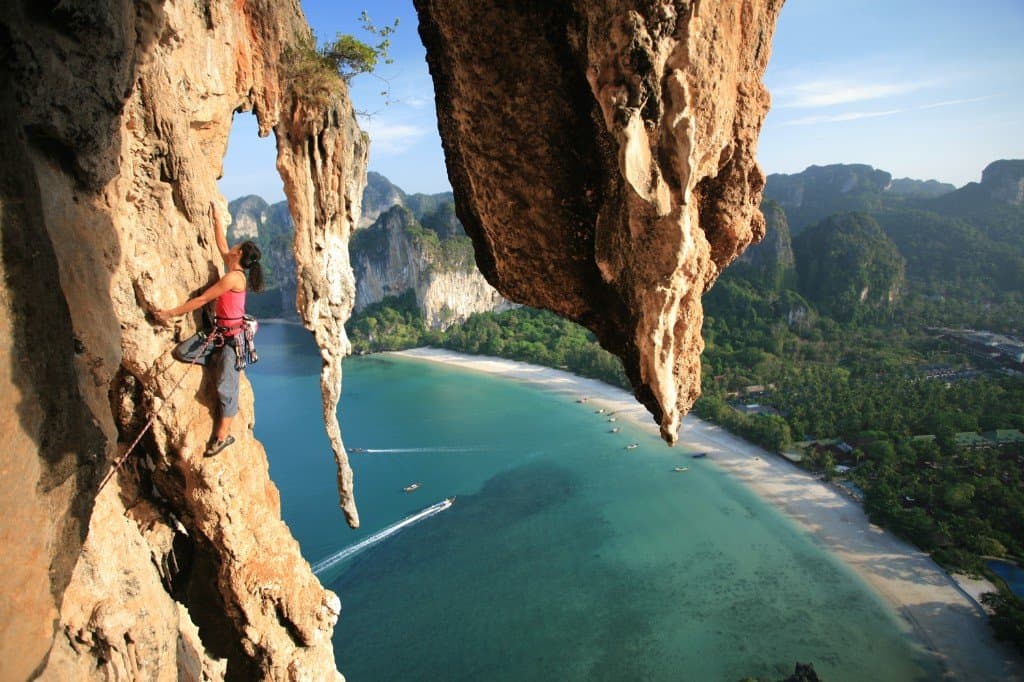
Railay West is the peninsula’s most recognisable arrival point and one of its best places for swimming and watching the sunset. The beach is framed by towering limestone cliffs on both sides, creating the dramatic landscape for which Railay is famous.
The sand is relatively broad, particularly at lower tide, and the water is generally more suitable for swimming than the mangrove-lined eastern side. Long-tail boats line parts of the shore during the day, carrying passengers between Railay and Ao Nang.
Behind the beach is Railay Walking Street, a compact pedestrian lane filled with restaurants, cafés, small bars, souvenir shops, convenience stores, tour desks and climbing businesses. It connects the western beach with Railay East and serves as the peninsula’s main commercial area.
Railay East has a different atmosphere. Its coastline contains mangroves and becomes very shallow at low tide, so it is not normally considered Railay’s best swimming beach.
However, Railay East is still an important part of the peninsula. It has a paved waterfront walkway, accommodation, restaurants, small bars and boat access. It is also positioned close to the path leading toward Phra Nang Beach, the Railay Viewpoint trail and several popular climbing areas.
At high tide, the eastern shoreline can look attractive and peaceful. At low tide, the exposed mud and mangrove roots make it better for walking and sightseeing than swimming.
Phra Nang Beach is often considered the most beautiful beach on the peninsula. It sits beneath immense limestone cliffs at Railay’s southern end and looks across the clear water toward offshore rock formations and islands.
The beach is suitable for swimming when conditions are calm, and kayaks are frequently available for exploring the surrounding coastline. Visitors can paddle around rock formations, examine small coves and view Railay’s cliffs from the water.
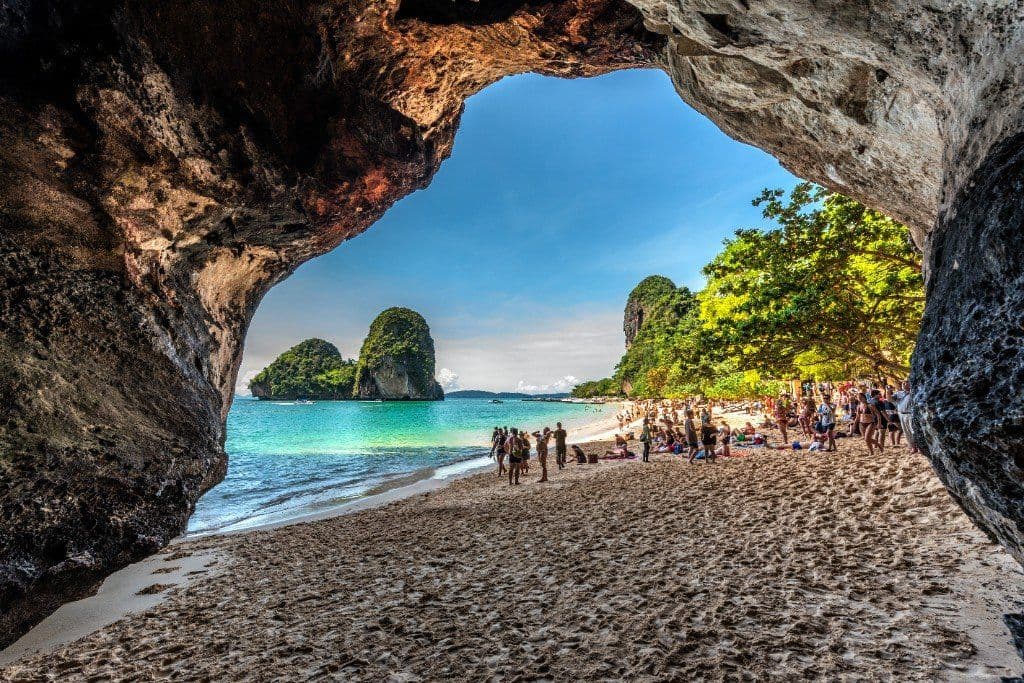
At one end of the beach is Phra Nang Cave, sometimes called the Princess Cave. The site has cultural and spiritual significance for local fishermen and contains offerings left by visitors. It should be approached respectfully rather than treated merely as an unusual photo opportunity.
Phra Nang can become crowded during the middle of the day because it is included in many Krabi island tours. Early morning and late afternoon generally provide a quieter atmosphere, although conditions vary by season.
Tonsai lies northwest of Railay West and has traditionally been associated with rock climbers and independent travellers. It is generally quieter and less polished than central Railay, with a more relaxed atmosphere.
The beach itself changes considerably with the tide. At low tide, rocks and reef areas may become exposed, while higher water creates a more attractive shoreline. Tonsai is particularly well known for climbing routes set into the surrounding limestone walls.
Visitors planning to walk between Tonsai and Railay should check conditions. Routes involving coastal rocks may become difficult or unsafe when the tide is high or the surface is wet.
Rock climbing is Railay’s signature activity. The peninsula’s limestone cliffs contain routes for different experience levels, and several local climbing schools provide guided introductory sessions and equipment rental. Beginners should climb with a qualified guide rather than attempting unfamiliar routes independently.
Kayaking is another popular choice. A kayak allows visitors to explore the cliffs, small bays and offshore formations at their own pace when the sea is calm.
The Railay Viewpoint trail offers elevated views across both sides of the peninsula. However, this is not a normal paved sightseeing path. Sections can be steep, muddy and physically demanding, particularly after rain. Proper footwear is strongly recommended. The route toward the lagoon is more difficult and should only be attempted by people who understand the conditions and their own physical limits.
Other activities include swimming, sunbathing, photography, walking between the beaches, enjoying a massage and taking boat trips to nearby islands. Snorkelling conditions close to shore vary according to visibility, tides and weather.
Railay has enough amenities for both day visitors and overnight guests. Restaurants range from casual Thai eateries and small cafés to hotel dining rooms and beachfront restaurants. Visitors can find Thai food, seafood, fruit shakes, coffee and familiar international meals.
Small convenience shops sell water, snacks, basic toiletries, sun protection and other essentials. Prices can be higher than on the mainland because supplies must be transported by boat.
Accommodation includes simple rooms, mid-range resorts and luxury beachfront properties. Staying overnight allows travellers to experience Railay before the main daytime tour groups arrive and after many visitors have returned to Ao Nang.
There are no major shopping centres, supermarkets or extensive medical facilities. Anyone requiring specific medication or important supplies should bring them from the mainland.
The most favourable weather generally occurs during Krabi’s drier season, approximately November through April. The sea is often calmer, rainfall is less frequent and conditions are usually better for beaches, kayaking, climbing and boat transport.
December through February is especially popular. This period can bring excellent weather, but it is also the busiest time of year. Accommodation may sell out, particularly around Christmas and New Year, so advance reservations are advisable.
From May through October, Krabi experiences its wetter southwest monsoon season. Railay remains open and can still have beautiful sunny periods, but heavier rain, stronger waves and sudden weather changes are more likely. Boat services and water activities may be delayed, changed or suspended when conditions become unsafe.
Visitors during the wetter months should keep their schedule flexible and protect phones, cameras and documents from rain and sea spray.
Railay’s lack of roads is not an inconvenience—it is an essential part of its character. The absence of normal traffic creates a peaceful pedestrian environment where beaches, restaurants and viewpoints are connected by short walking paths.
A motorbike remains one of the most convenient ways to travel around Ao Nang, Krabi Town, Ao Nam Mao and the wider province. For a Railay visit, simply ride to an appropriate mainland departure point, park the motorbike and board a long-tail boat.
After approximately 15 minutes on the water, you arrive in a place that feels completely separate from the busy mainland: a peninsula of limestone cliffs, tropical beaches, walking paths and unforgettable Andaman Sea scenery.
Railay Peninsula (boat access from Ao Nang / Ao Nam Mao), Krabi
Photos