
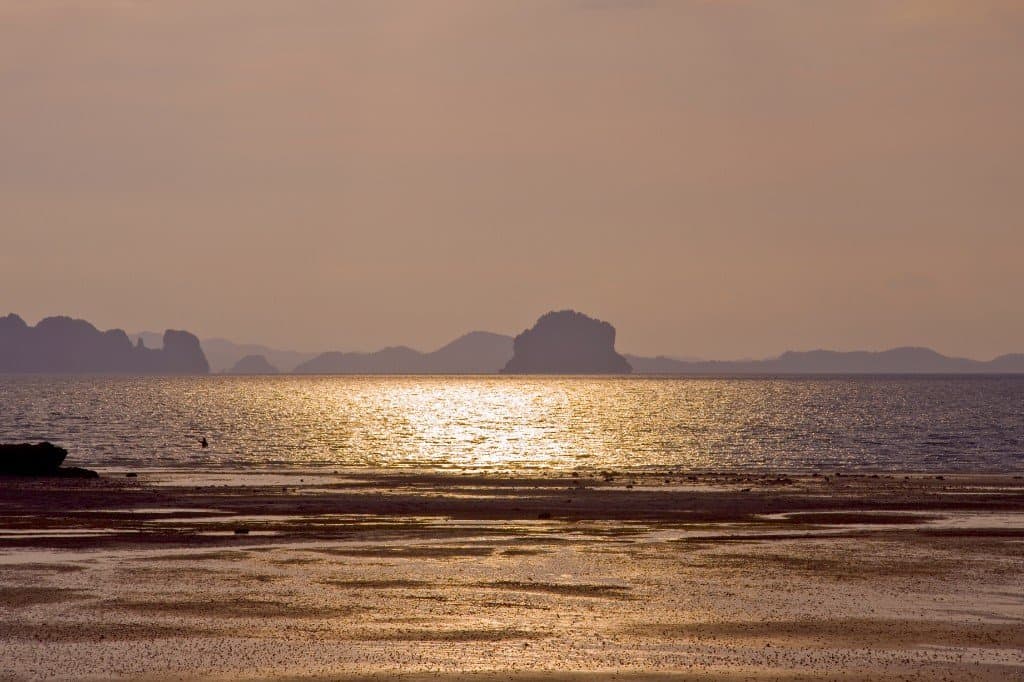
Klong Muang Beach
A calmer 1.5 km stretch north of Ao Nang — soft sand, resort-backed exclusivity, sunsets and easy scooter access to Tubkaek and island trips.
- Visit:
- Half day to multi-day base

Explore Krabi
Krabi’s coastline offers several very different beach experiences. Ao Nang is busy and convenient, Klong Muang and Tubkaek are quieter resort areas, Railay delivers the province’s most dramatic scenery, while Ao Nam Mao and Ao Thalane provide less-developed coastal environments.
The best choice depends on whether visitors want swimming, restaurants, sunsets, kayaking, privacy or easy access to tours. Sea conditions, beach width and water clarity also change with the tide and season, so no beach looks exactly the same throughout the day.
Klong Muang Beach is located northwest of Ao Nang in the Nong Thale area. It is quieter and less commercially concentrated than Ao Nang, although several luxury resorts, smaller hotels, restaurants and local businesses operate around the beach. Visitors can reach Klong Muang entirely by road, making it a convenient destination when travelling by Krabi motorbike rental.
The beach is divided into several sections by rocky areas, small headlands and resort properties. Some parts have broad stretches of pale sand, while other sections become narrow, rocky or covered with coral fragments when the tide retreats. Visitor reports consistently describe Klong Muang as peaceful and uncrowded compared with Ao Nang. The sections maintained by beachfront hotels may appear cleaner and more organised than undeveloped stretches.
Klong Muang is good for relaxed swimming when the sea is calm and the tide is reasonably high. The shallow water also makes it attractive to families, although children must still be supervised. Water shoes can be useful because shells, stones and pieces of coral may be present beneath the surface.
Late afternoon is an excellent time to visit. The beach faces generally westward, offering views of offshore islands as the sun lowers over the Andaman Sea. Morning is quieter and cooler, making it better for walking, reading or swimming without strong sunlight.
The beach is best suited to couples, families and visitors who want a slower atmosphere. There are places to eat and drink, but the selection is more spread out than in Ao Nang. Visitors staying away from the central restaurant areas may benefit from having their own transport.
Klong Muang is not ideal for travellers seeking busy nightlife, extensive shopping or a large concentration of tour offices. At very low tide, swimming can also be less appealing because the shoreline retreats and rocky areas become exposed.
Parking is normally found beside public access roads or near local businesses, but riders should avoid blocking resort entrances and narrow roads. Sand and loose gravel sometimes collect close to beach access points, so motorbike riders should approach slowly.
Best for: Peaceful swimming, sunset walks, couples and families.
Not ideal for: Nightlife, extensive shopping or reliable swimming at every stage of the tide.
Ao Nang Beach is Krabi’s busiest and most developed mainland beach area. It is surrounded by hotels, restaurants, bars, convenience stores, massage shops, tour offices and transport services. The beach is also one of the province’s principal departure points for long-tail boats travelling to Railay, Phra Nang and nearby islands.
The beach itself is long and scenic, with limestone cliffs visible towards its southern end. It is especially attractive around sunset, when visitors gather along the promenade and beachfront. However, Ao Nang should be understood as both a beach and an active transport centre. Long-tail boats regularly arrive and depart, and the sound of their engines is part of the daytime environment.
Swimming is possible, particularly in calmer conditions and away from the busiest boat areas. Nevertheless, visitors primarily interested in clear water and uninterrupted swimming may prefer Railay, Phra Nang, Klong Muang or an offshore island. Water appearance changes significantly with weather, tides and boat movement.
Ao Nang is excellent for convenience. Food, drinks, equipment, pharmacies and transport are all available within walking distance. It is also a practical beach for travellers who want to spend only an hour or two beside the sea before eating, shopping or taking a boat trip.
The busiest period generally runs from November through April. During this time, the beachfront road can become congested with taxis, vans, songthaews, motorbikes and pedestrians. Parking can be difficult to find in the evening, particularly near the central beach and boat-ticket areas.
Anyone arriving by Ao Nang motorbike rental should ride slowly near the waterfront. Tourists sometimes cross without checking traffic direction, vehicles stop suddenly to collect passengers, and sand can collect near the side of the road. Early morning is the easiest period for driving and parking. Late afternoon is better for atmosphere but brings heavier traffic.
Ao Nang Beach is best for first-time visitors, families, groups and anyone who values immediate access to services. It is less suitable for travellers looking for seclusion or a completely natural beach environment.
Best for: Convenience, sunsets, boat departures, restaurants and first-time visitors.
Not ideal for: Solitude, uninterrupted swimming or a quiet natural setting.
Tubkaek Beach, also written as Tub Kaek or Tup Kaek, lies beyond Klong Muang at the quieter northwestern end of Krabi’s developed mainland coastline. It is surrounded by forested hills, upscale resorts and views across the Andaman Sea towards the Hong Islands and other limestone formations.
The beach can be reached completely by road. Travelling from Ao Nang generally takes around 25–35 minutes depending on traffic and the exact starting point. The final road passes through Klong Muang before reaching a quieter area with fewer shops and services.
Tubkaek is known for its peaceful atmosphere and impressive sunset views. Visitor reviews commonly mention clean sand, low crowd levels and fewer boat disturbances than at Ao Nang. Several resorts have beachfront restaurants that may accept outside guests, although access policies and minimum spending requirements can vary.
Swimming conditions depend strongly on the tide. At higher tide, the water comes closer to the beach and swimming is usually easier. At low tide, the sea may retreat considerably, exposing sand, mud, stones or shallow areas. Water clarity also varies; some visitors find the sea calm and attractive, while others report soft or silty conditions underfoot.
The best time to visit is from late morning through sunset, provided the tide is suitable. Those mainly interested in swimming should check the day’s tide timetable. Visitors coming for scenery, photography or dinner may prefer late afternoon.
Tubkaek is excellent for couples, honeymooners, photographers and anyone who wants a quiet day beside the sea. It is also close to the trailhead for the Hang Nak or Dragon Crest hike, allowing fit visitors to combine an early hike with an afternoon beach visit.
The area is not ideal for nightlife, budget shopping or travellers who want many restaurants within walking distance. Food and drinks can cost more at luxury resorts, so visitors may prefer to bring water or eat in Klong Muang.
A Krabi motorbike rental provides useful independence because public transport is limited. Riders should return before dark when possible, as parts of the road are quiet and lighting may be inconsistent.
Best for: Sunsets, romance, photography and peaceful resort-style beach visits.
Not ideal for: Nightlife, extensive facilities or dependable low-tide swimming.
Railay is part of the Krabi mainland, but towering limestone cliffs separate it from the road network. Visitors cannot drive directly to Railay. Anyone using a Krabi motorbike rental must park on the mainland and complete the journey by long-tail boat.
Boats commonly operate from Ao Nang Beach to Railay West and from Ao Nam Mao Pier to Railay East. The Tourism Authority of Thailand describes the boat journey from Ao Nang as taking approximately 20 minutes, though waiting time, weather and passenger demand can affect the total trip.
Railay contains several distinct coastal areas. Railay West is the principal swimming and sunset beach, with soft sand and dramatic cliffs on both sides. Railay East is lined with mangroves and is mainly used for boat arrivals, accommodation and restaurants rather than conventional beach swimming. Phra Nang Beach, reached by a walking path from Railay East, is generally considered the peninsula’s most impressive swimming beach. Tonsai Beach lies around the western cliffs and is particularly associated with rock climbing.
Railay is good for swimming, kayaking, paddleboarding, photography and relaxing in spectacular scenery. The limestone cliffs make it one of Krabi’s most recognisable destinations, and the area is internationally known for rock climbing.
Early morning offers the quietest conditions. By late morning, day visitors and island tours can make Railay West and Phra Nang significantly busier. Late afternoon provides attractive light and sunset views, but day visitors must confirm when and where they can board a return boat.
Visitors should bring only what they can comfortably carry. Boarding a long-tail boat may involve walking through shallow water, so waterproof footwear and a protected phone case are useful. Boat operations can be disrupted by rough seas, heavy rain or strong wind.
Railay is not ideal for visitors who require direct road access, easy mobility or guaranteed transport at every hour. Food and accommodation may also cost more because supplies arrive by boat.
Best for: Dramatic scenery, swimming, climbing, kayaking and full-day beach trips.
Not ideal for: Direct motorbike access, mobility limitations or travellers avoiding boat journeys.
Ao Nam Mao is located southeast of Ao Nang along the coastal road towards the Shell Cemetery and Sai Thai. It is less developed and less visited than Ao Nang, making it useful for travellers seeking a quieter local environment.
The area is best known for Ao Nam Mao Pier, one of the main departure points for boats to Railay East. The nearby shoreline extends beyond the pier, with narrow sections of sand, trees, residential properties, resorts and undeveloped land. Visitors can reach the area directly by road using a Krabi motorbike rental.
Ao Nam Mao is peaceful, but it should not be promoted as one of Krabi’s finest swimming beaches. Close to the pier, the sand and seabed can appear dark, muddy or silty, especially at low tide. Farther sections may have softer yellow sand, but the beach is often narrow and sea conditions vary.
The main appeal is the atmosphere. Ao Nam Mao is quieter than Ao Nang, with fewer crowds, less nightlife and more space for walking. It can be pleasant for watching boats, photographing the coastline, eating at a small beachfront restaurant or enjoying a peaceful sunset.
Morning is a good time for walking because the temperature is cooler. Late afternoon is preferable for views and relaxed dining. Those planning to swim should check the tide and inspect the water before entering. At low tide, the sea may retreat and reveal mud, stones and marine debris.
Ao Nam Mao is convenient for travellers staying nearby or taking a boat to Railay. Parking around the pier can become busy, so motorbikes should be left only in clearly permitted locations. Riders must watch for taxis, vans, pedestrians and vehicles turning suddenly around boat departure times.
The beach is recommended for visitors who value quiet surroundings more than perfect sand or turquoise water. It may also suit long-term visitors who want to escape Ao Nang’s central tourist area.
It is not ideal for anyone seeking a classic white-sand beach, dependable swimming or extensive beachfront facilities. Railay or Klong Muang will normally provide a better dedicated beach day.
Best for: Quiet walks, local atmosphere, Railay boat access and uncrowded sunsets.
Not ideal for: Clear-water swimming, broad sandy beaches or extensive entertainment.
Ao Thalane is a scenic coastal bay north of Ao Nang, surrounded by mangrove forests, limestone cliffs, narrow channels and rural communities. Although it has shoreline areas and small beaches, it is primarily an ecological and kayaking destination rather than a conventional beach resort.
Visitors can reach Ao Thalane by road, passing through the countryside north of Nong Thale and Khao Thong. It is roughly 25–35 kilometres from Ao Nang depending on the chosen route and departure point. A Krabi motorbike rental is a practical way to reach the kayaking centres, restaurants and small piers around the bay.
Ao Thalane is most famous for guided sea-kayaking trips. Routes pass through mangrove channels, limestone canyons and sheltered lagoons where visitors may see monkeys, birds, mudskippers and other coastal wildlife. Kayak operators organise trips according to tides because certain channels may be difficult or impossible to enter when the water is too low.
The beaches in this area tend to be small, tidal and natural. Sand may be mixed with mud, shells or mangrove material. The water is often calm because the bay is sheltered, but it is not normally as clear or visually tropical as Railay or the Hong Islands.
Ao Thalane is therefore excellent for paddling, nature observation, photography and experiencing Krabi’s mangrove ecosystem. It is not the best choice for travellers who simply want to spread out a towel and swim for several hours.
Morning is generally the most comfortable time to visit, although the tide is more important than the clock. A reputable operator should explain when the water level will provide the best kayaking conditions. Late afternoon can be scenic, but visitors should allow enough daylight for the rural ride back.
Those kayaking should wear a life jacket, protect electronics in a dry bag and avoid approaching wildlife. Monkeys should never be fed. Sunscreen, drinking water and secure sandals are recommended.
Roads near the bay can be narrow, with sharp bends, loose gravel and occasional livestock or local work vehicles. Riders should slow down through villages and avoid travelling during heavy rain.
Best for: Kayaking, mangroves, wildlife, photography and quiet natural scenery.
Not ideal for: Traditional beach swimming, nightlife or a developed resort atmosphere.
For convenience and activity, Ao Nang is the strongest choice. Railay provides the most dramatic scenery and some of the best swimming, but it requires a boat. Klong Muang offers a balance of tranquillity and facilities, while Tubkaek is better for romantic sunsets and peaceful resort surroundings.
Ao Nam Mao works well for quiet coastal walks and Railay access but is less impressive for swimming. Ao Thalane should be chosen primarily for kayaking and mangrove exploration rather than for a conventional beach day.
Verification status: Partially Verified. Locations, road or boat access, the general character of each beach and Railay’s boat-only access are verified. Swimming quality, water clarity, beach width, boat availability and access conditions change with tides, weather and season.
Things to do
Blog articles
A calmer 1.5 km stretch north of Ao Nang — soft sand, resort-backed exclusivity, sunsets and easy scooter access to Tubkaek and island trips.
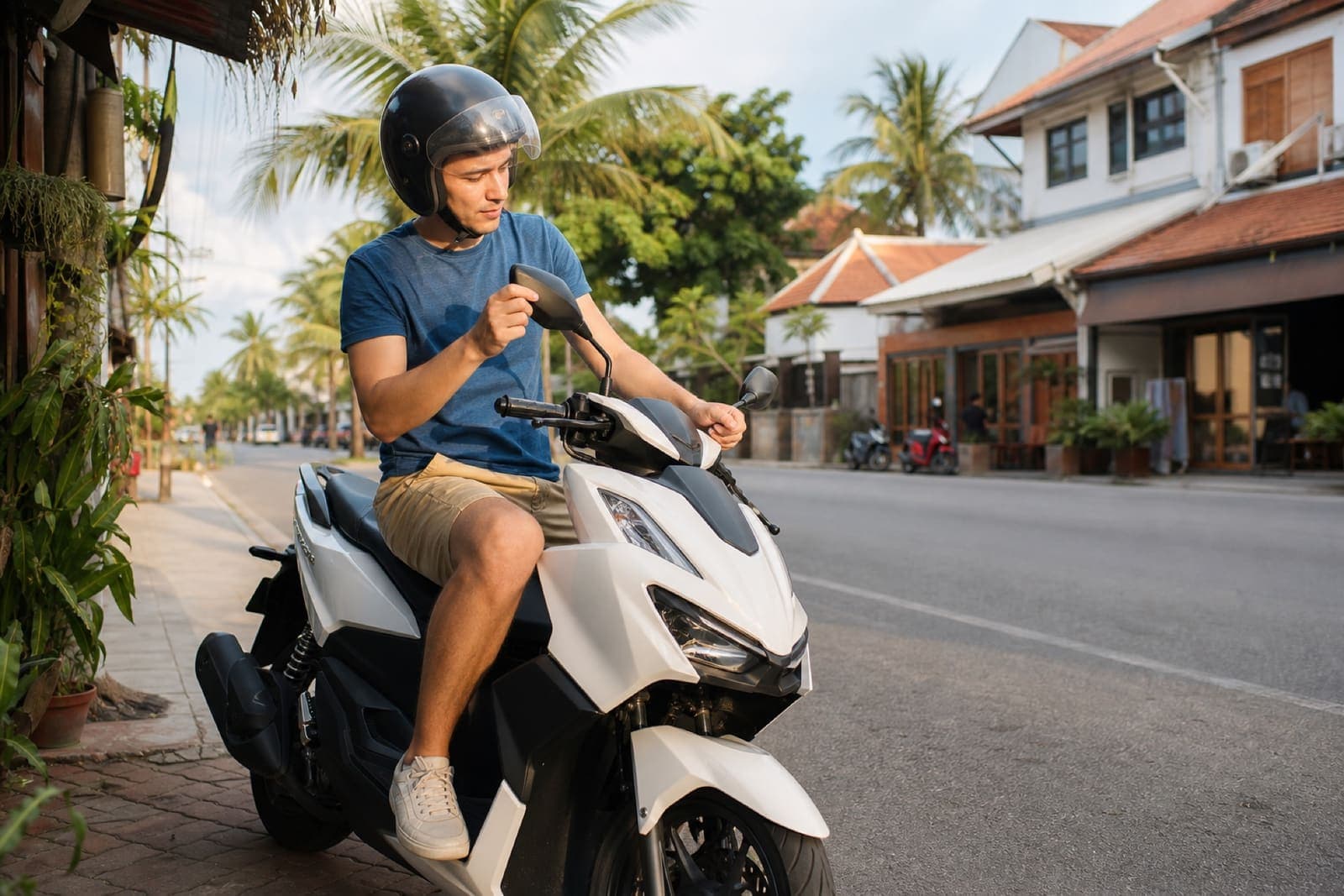
How to ride, stay safe and avoid common mistakes as a first-time scooter rider in Thailand — practical tips, not professional instruction.
Explore the area