Temples
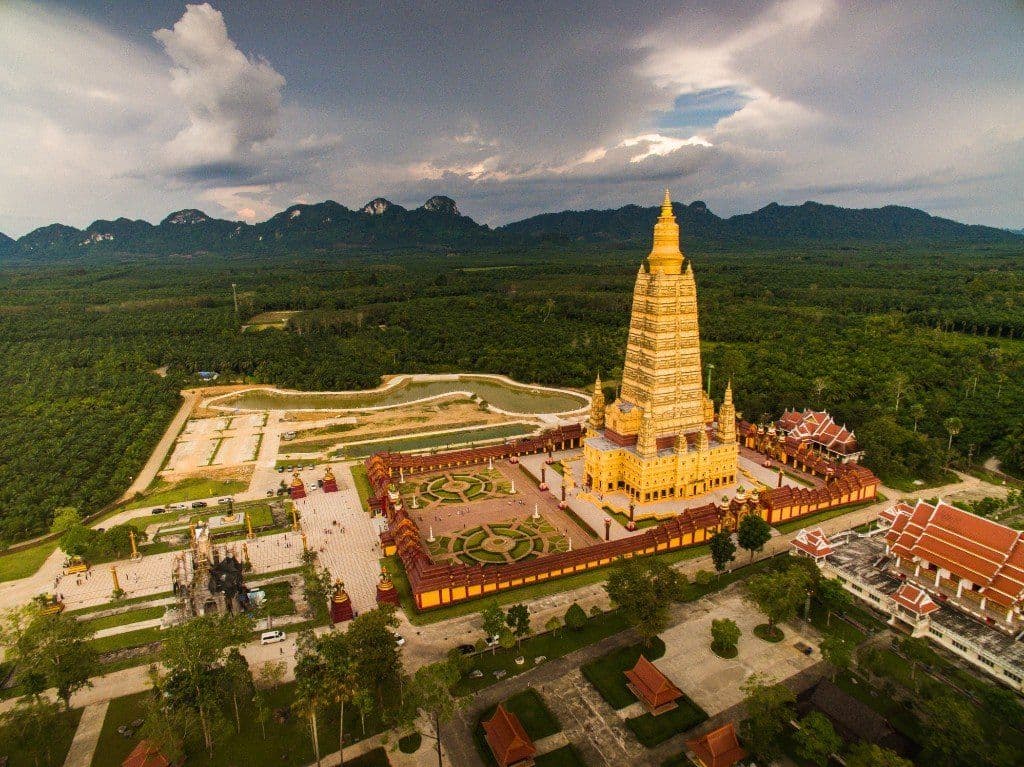
Soaring golden Mahabodhi-style chedi in Ao Luek — one of southern Thailand's most striking pagodas, a natural pairing with Wat Bang Riang on Phang Nga temple rides.
Nestled amid rubber and oil palm plantations in southern Thailand, Wat Bang Thong (officially Wat Mahathat Wachiramongkol) stands as one of the most impressive temples accessible on Phang Nga area temple itineraries. Although administratively in Ao Luek district of neighboring Krabi province, it lies close enough to Phang Nga town — roughly 30–40 kilometres after Wat Bang Riang — to feature regularly in rides exploring the region.
Its soaring golden chedi, modelled on India's Mahabodhi Temple at Bodh Gaya (the site of the Buddha's enlightenment), rises dramatically above the countryside and has earned it a reputation as one of the tallest and most visually striking pagodas in southern Thailand.
The temple's origins date to around 1940, when local villagers donated land and established a modest monastery known simply as Wat Bang Thong after the nearby village. Major expansion began in the late 1990s under Abbot Phra Ratcha Vajirakon, who rebuilt much of the complex while preserving the ubosot.
The centrepiece Phra Mahathat Chedi was constructed starting in 2002 to mark the 50th birthday of the then-Crown Prince (now King Rama X). In 2006, King Bhumibol Adulyadej (Rama IX) formally renamed the temple Wat Mahathat Wachiramongkol and added royal initials to the ubosot gable. Funded largely by community donations estimated in the tens of millions of baht, the expansive grounds cover well over 100 rai.
Visitors approaching by road first notice the gleaming, multi-faceted golden chedi, reported at heights ranging from about 70 to 95 metres. Its Indian-inspired architecture contrasts with the more common Thai bell-shaped chedis. Covered galleries surround the base on all four sides, lined with hundreds of Buddha images that create a powerful visual effect.
Inside the hall beneath the chedi, richly painted murals depict scenes from Buddhist and Hindu mythology, alongside bas-reliefs, naga (serpent) niches sheltering crowned Buddhas, and statues of deities.
Outside the main structure stand notable large statues. A towering figure of the revered southern monk Luang Pu Thuat (sometimes described as 9 metres or larger) sits upon a king cobra, referencing the legend that a cobra spat a magical crystal ball toward him as an infant. A standing Buddha and other mythological figures — including representations of Indra, the three-headed elephant Erawan (Airavata), and additional nagas — add to the complex's layered symbolism.
The overall grounds feel spacious and well-maintained, with manicured areas that enhance the sense of serenity.
Opening hours are typically 8:00 a.m. to 6:00 p.m. daily. Foreign visitors usually pay an entrance fee of around 50 Thai baht (Thai nationals enter free), with proceeds supporting the active monastery. Free parking is available on the spacious grounds.
A café or coffee shop near the entrance offers drinks and light snacks — welcome on hot days — and water is sold on site. Facilities are generally clean, and the site is accessible enough that many visitors with limited mobility can navigate the main areas, though some climbing or walking is involved.
As at all Thai temples, modest dress is required (shoulders and knees covered); sarongs are often available if needed.
Traveler feedback on platforms such as TripAdvisor consistently rates the temple highly (often 4.6–4.9 out of 5). Reviewers praise the breathtaking architecture, peaceful atmosphere away from heavier tourist crowds, and the chance to experience an active working monastery.
Many describe it as a must-visit or insider tip, especially when combined with nearby Wat Bang Riang in Phang Nga province. Some note occasional construction or renovation work, and advise avoiding major holidays such as New Year's when local crowds and traffic increase significantly. The rural setting, surrounded by plantations, contributes to the tranquil feel that many find spiritually enriching.
Reaching this temple in Phang Nga–adjacent countryside is easiest by private vehicle or hired car with driver; public transport is limited. From Phang Nga town the drive takes under an hour; from Krabi or Ao Nang it is roughly 60–75 minutes; from Phuket allow 1.5–2 hours.
The site pairs naturally with other regional stops such as waterfalls or the hilltop views at Wat Bang Riang.
Wat Bang Thong rewards visitors with architectural grandeur, cultural depth, and a relatively uncrowded setting. Its golden chedi and surrounding statues make it a memorable highlight for anyone exploring temples in the Phang Nga and Krabi region — offering both visual spectacle and a quiet space for reflection amid southern Thailand's green hills.
Ao Luek District, Krabi Province (near Phang Nga town)
Photos
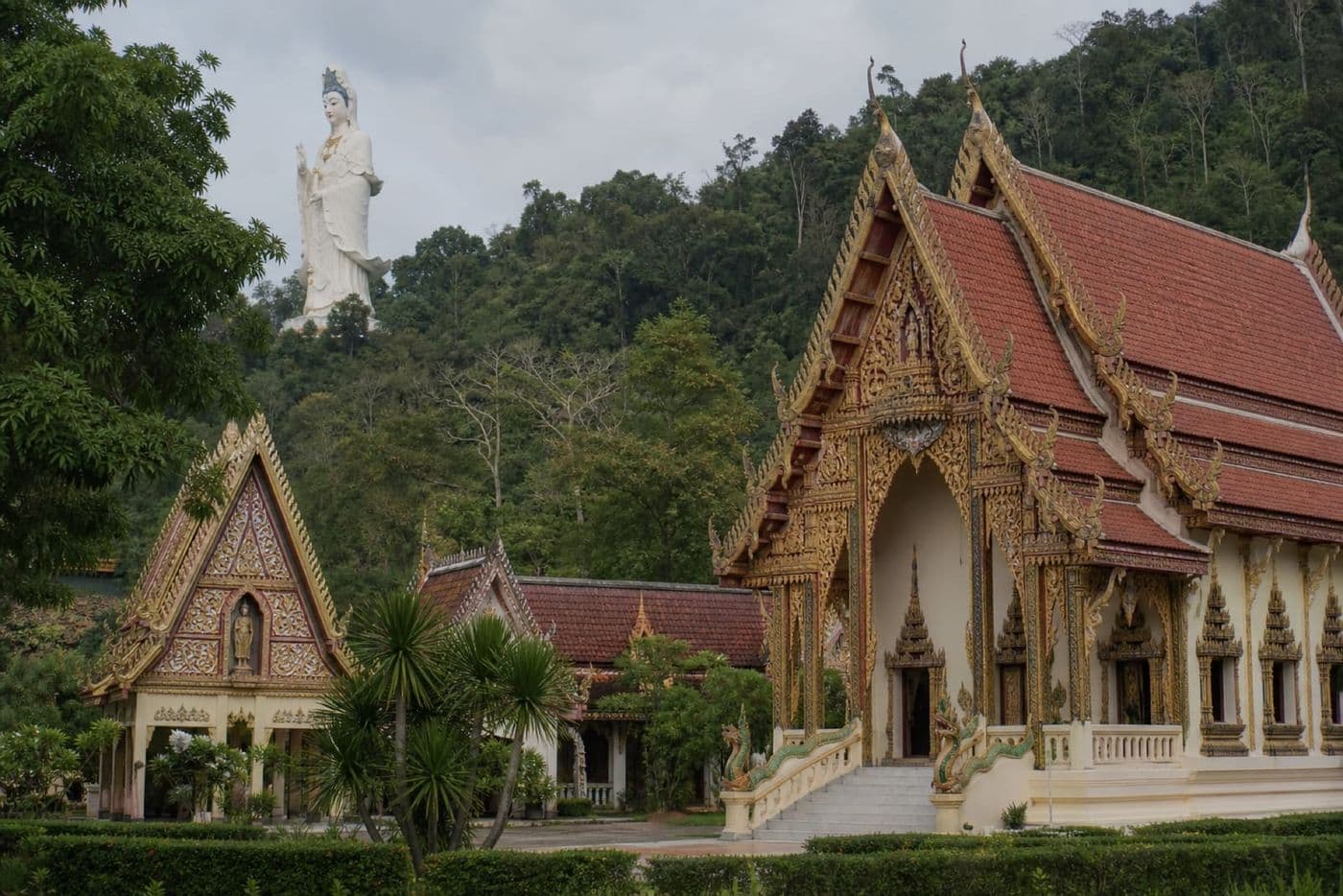
Hilltop temple on Khao Lan Mountain in Thap Put — boat-shaped ordination hall, golden Buddha, towering Guan Yin statue and panoramic views over Phang Nga.
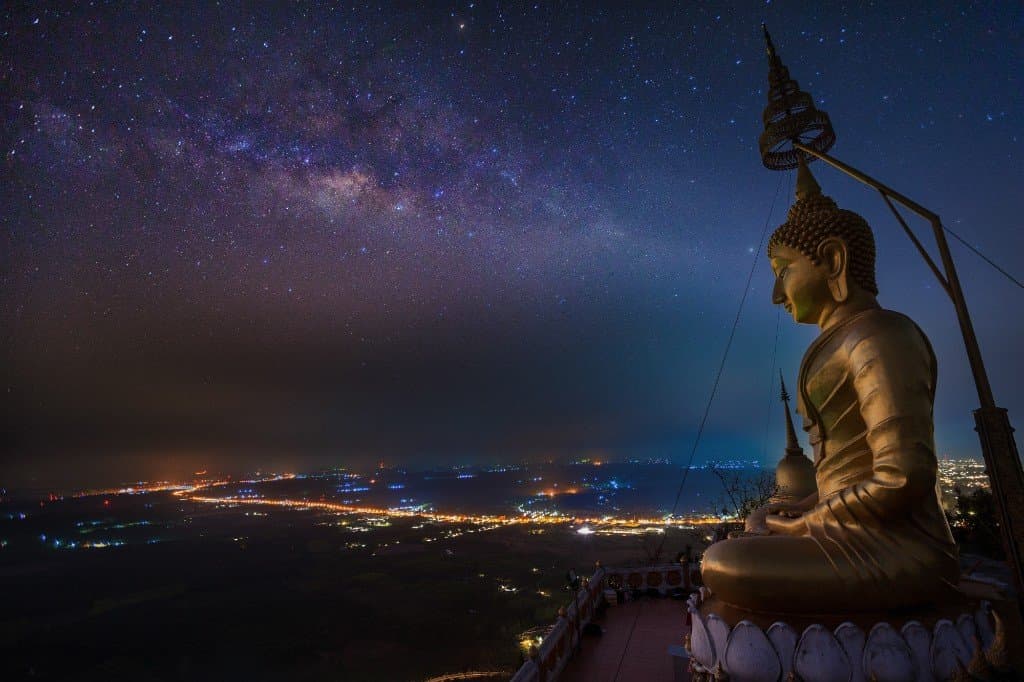
One of Krabi’s Most Famous Landmarks
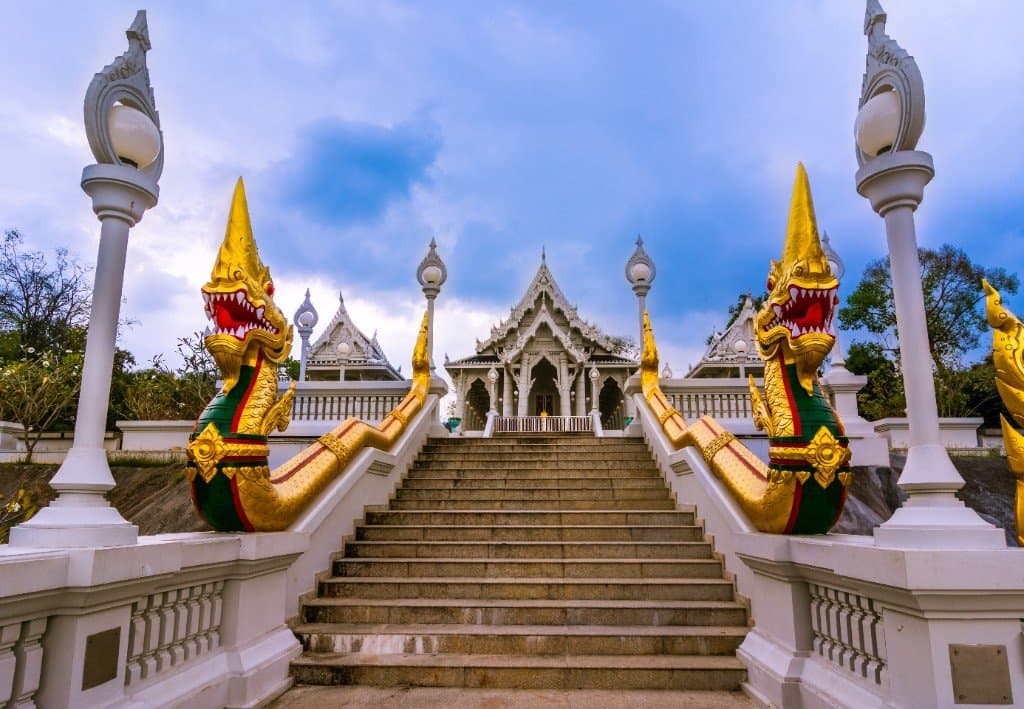
White-and-blue Buddhist temple in central Krabi Town with a famous golden Naga staircase — easy to reach by scooter from Ao Nang or on foot from Pak Nam.
