
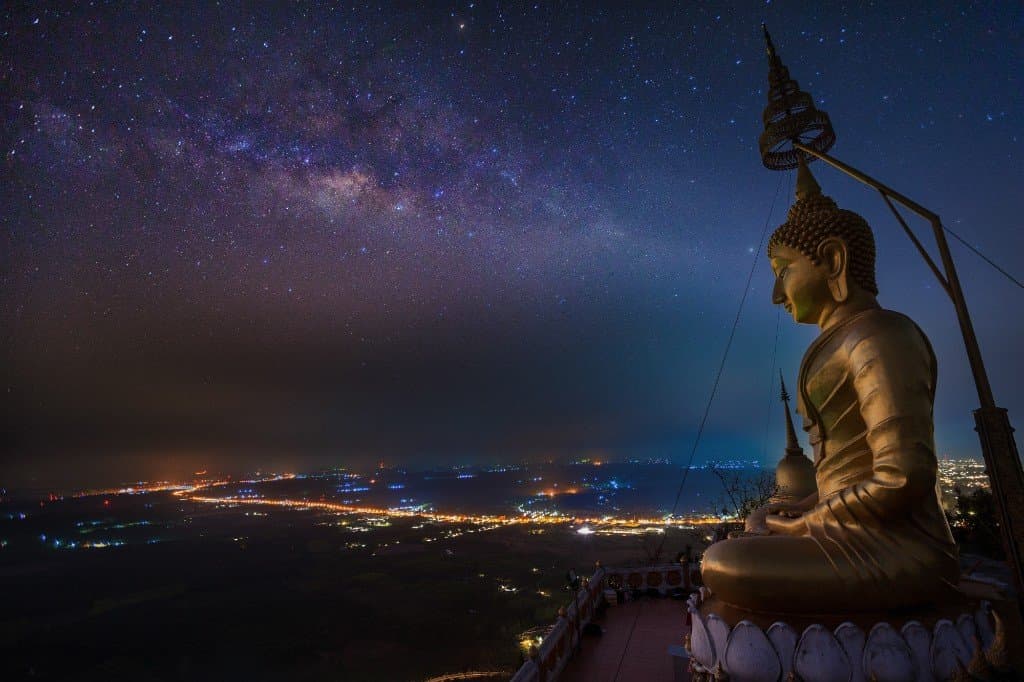
Tiger Cave Temple
One of Krabi’s Most Famous Landmarks
- Visit:
- 2–3 hours on site (plus riding time)

Explore Krabi
Krabi’s cultural landscape reflects its mixed religious makeup. The province has a majority Muslim population, which means mosques are a common sight in towns, villages, and along rural roads. At the same time, Buddhists make up roughly 30 to 35 percent of residents, so temples remain an important part of daily life and the visitor experience. This balance creates a quiet coexistence of faiths that feels natural rather than divided.
Buddhist temples, or wats, appear in many forms across the province. Some are large and impressive, with tall chedis, golden Buddha images, and wide courtyards designed for gatherings and festivals. Others are smaller, simpler structures tucked into forested hillsides or quiet neighborhoods, offering a more intimate atmosphere. Whether grand or modest, nearly all of them welcome visitors. Most stay open throughout the day, and entry is generally free or requires only a small donation.
The best-known example is Tiger Cave Temple (Wat Tham Suea) just outside Krabi Town. Its long staircase leads to a hilltop platform with sweeping views, and the complex includes both caves used for meditation and open spaces filled with statues. Other temples are less famous but equally accessible. Some sit near beaches or inland villages, while a few rest on higher ground that rewards a short climb. Visitors often find these quieter spots peaceful places to pause during a day of exploring.
When you enter any temple, basic respect is expected. Cover your shoulders and knees—lightweight trousers, skirts, or long shorts and a shirt with sleeves work well. Remove your shoes before stepping into the main buildings, and keep your voice low. These simple rules help maintain the calm atmosphere that locals value. Beyond the dress code, there are few restrictions. You can usually visit in the morning, afternoon, or late day, though early hours tend to be cooler and less crowded.
Because Krabi’s Muslim majority shapes much of the everyday landscape, you will also pass mosques of varying sizes. Some are modest neighborhood buildings; others feature distinctive architecture and minarets. While mosques generally have stricter visitor protocols than temples, their presence reminds travelers that the province is home to more than one faith tradition.
Together, the temples and mosques give Krabi a layered cultural texture. The Buddhist sites remain open and approachable, ranging from grand complexes to simple village wats. As long as you dress modestly and move with quiet respect, you are free to explore them at almost any time. This openness, paired with the visible Muslim majority, makes Krabi’s religious landscape both welcoming and distinctive.
Things to do
Blog articles
One of Krabi’s Most Famous Landmarks
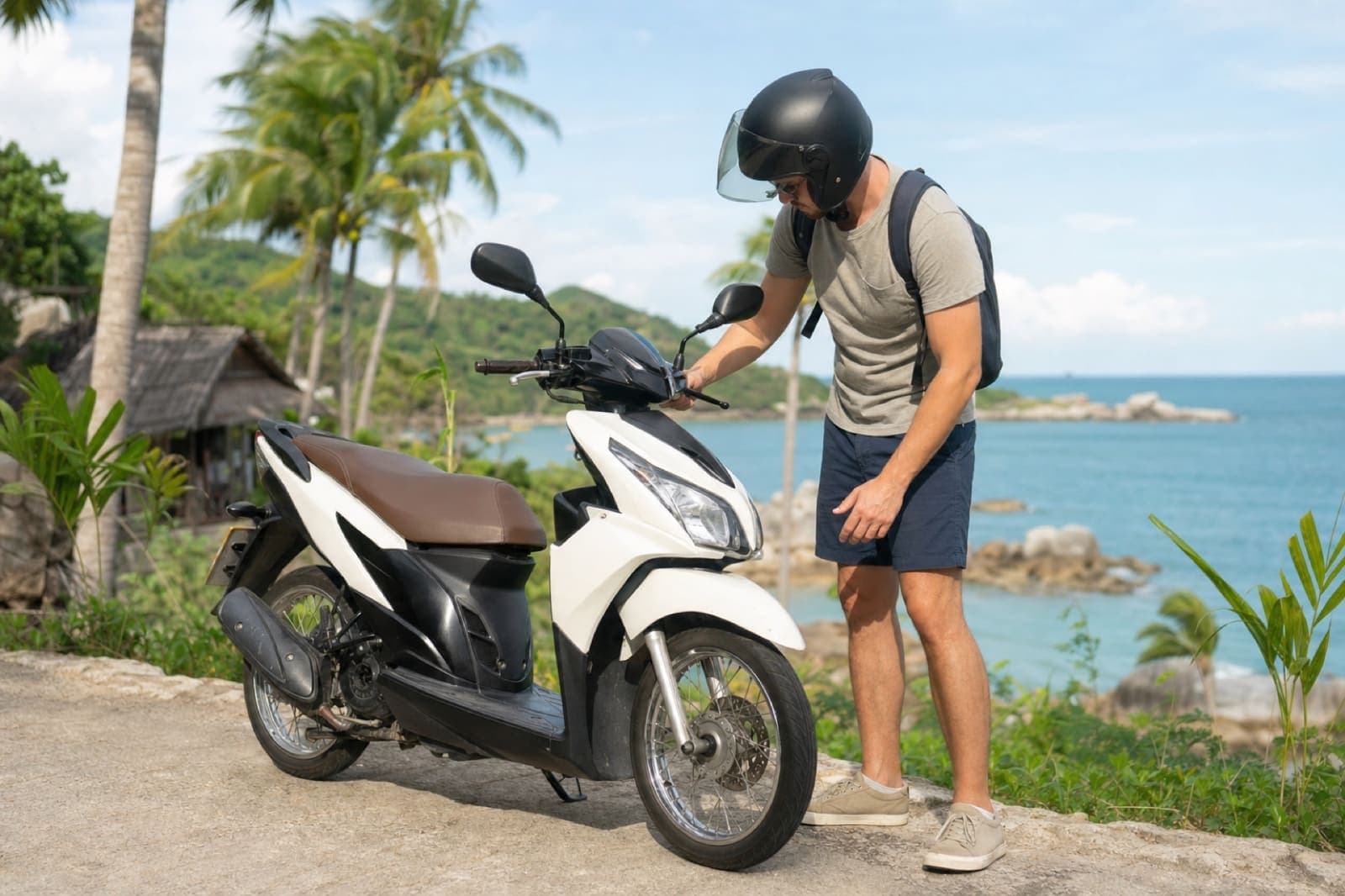
Core safety habits for riding in Thailand — ride within your ability, go slow, wear a helmet, and understand local road culture. Practical basics, not legal advice.
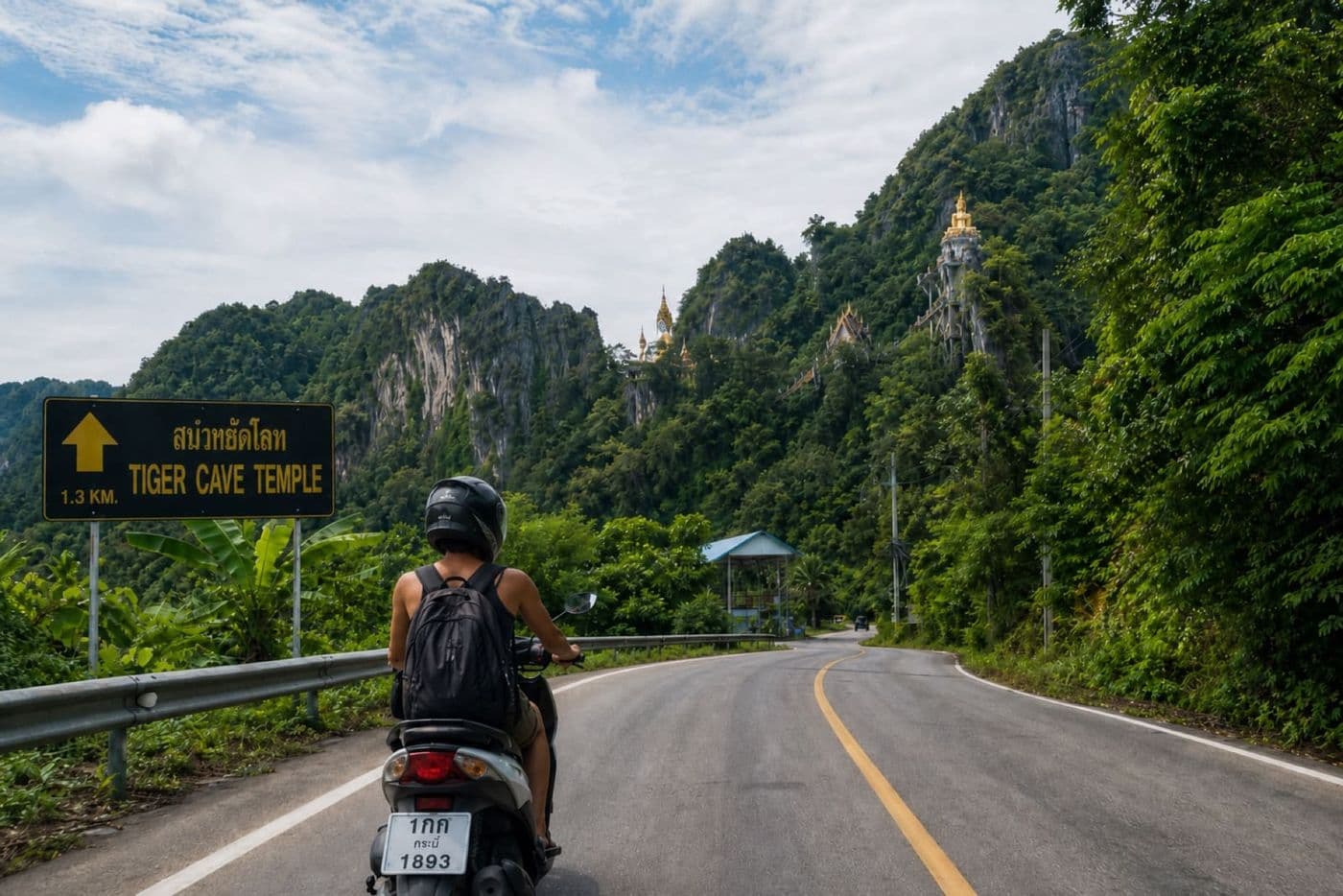
A moderate inland ride toward one of Krabi's most famous temples — plan the stair climb separately from your riding time.
Explore the area