Temples
Hillside temple near Ao Nang — golden Buddha, Guan Yin statues, steep dragon staircase and views over limestone peaks and the coast.
Just a short distance from the busy beaches of Ao Nang in Krabi Province, Wat Phu Khao Phra Maha Bodhisattva (วัดภูเขาพระมหาโพธิสัตว์) offers a peaceful hillside retreat often called the Mountain Buddha Temple, Chinese Temple on the Hill, or Ao Nang Guanyin Bodhisattva Temple.
Located about 3 to 3.5 kilometres from Ao Nang beach — near the police station and Makro area — this relatively modern complex rewards visitors with a large golden Buddha, Chinese-influenced statues, and elevated views over the limestone landscape and coastline.
Completed in 1996 to mark the 50th anniversary of King Bhumibol Adulyadej's ascension to the throne, the temple is a more recent addition to Krabi's religious sites compared with older complexes elsewhere in southern Thailand.
It blends Thai Buddhist elements with strong Chinese decorative influences, reflecting the Bodhisattva theme in its name (Phra Maha Bodhisattva refers to a great enlightened being, often linked here to Guan Yin). The site remains less crowded than nearby Tiger Cave Temple, making it a quieter option for those seeking both spiritual atmosphere and scenery.
Access begins via a small alley off the main Ao Nang road. From the base, visitors climb a series of stairs — estimates range from around 200 to 400 steps — leading up the hillside.
The central staircase is notably steep and narrow, so many prefer the parallel side stairs, which feature more standard-sized steps and feel easier. Along the ascent, platforms and resting points display a variety of statues: Buddha images in different postures, white elephants, sampao (Chinese-style) boats, and figures of the Chinese goddess of compassion Guan Yin (Kuan Im or Kwam Im).
A prominent thousand-armed Guan Yin statue is a focal point for many worshippers seeking blessings.
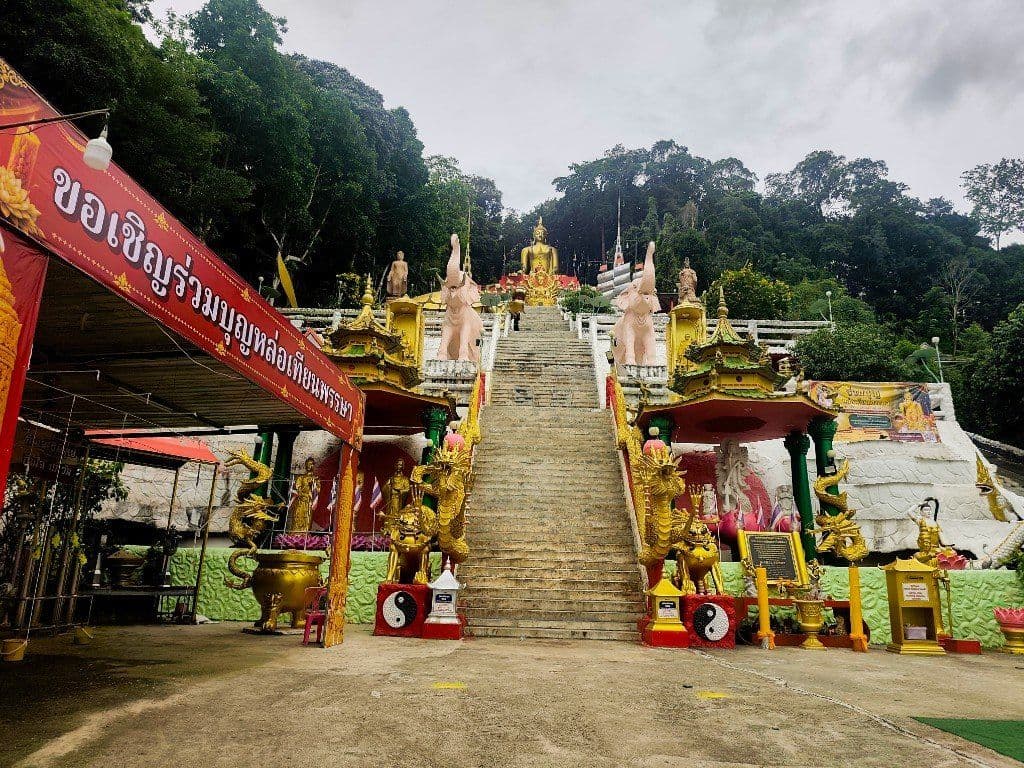
At the summit sits the large golden Buddha, visible from a distance and serving as the temple's serene centrepiece. Just below it, a platform features highly realistic statues of three venerated monks.
From the top, clear-day views take in distinctive limestone peaks, the turquoise waters along the Ao Nang coastline, and sometimes distant Andaman Sea islands. Late afternoon light enhances the golden Buddha, and some visitors time their climb for sunset, even if the sun does not set directly over the main vista.
The overall atmosphere is calm and reflective, with the elevated setting providing a welcome contrast to the beach crowds below.
The temple is generally open from approximately 6:45 a.m. to 7:00 p.m. daily, though exact times can vary slightly by season. Entry is free; donations are welcome and help maintain the facilities.
As at all Thai temples, modest dress is required — shoulders and knees covered. Lightweight shawls or wraps can usually be borrowed or rented on site for a small fee (around 20 baht) if needed. Comfortable shoes, sun protection, and water are recommended, as the climb can be hot and steep.
A monk is often available in a hall near the base of the stairs for blessings. Parking is limited at the entrance, so arriving by scooter, tuk-tuk, or on foot is common.
The site is supported by visitor donations rather than extensive commercial amenities, so facilities remain basic — there is no large café on the grounds, though drinks and snacks are easily found back in Ao Nang.
From Ao Nang beach the journey takes only about 10 minutes by rented scooter or a short tuk-tuk ride (agree on the price beforehand; drivers can wait during the visit). Walking is feasible for those staying nearby.
From Krabi Town the trip is longer, around 25–30 minutes by taxi or tuk-tuk.
Traveller feedback on platforms such as TripAdvisor rates the temple positively, often around 4.6 out of 5. Reviewers highlight the impressive golden Buddha, the variety of statues, the manageable yet rewarding climb, and the peaceful views.
Many describe it as a worthwhile cultural diversion from beach activities, noting that it feels quieter and more intimate than busier attractions. Some advise visiting in the morning for cooler temperatures and clearer views, or in late afternoon for softer light on the statues.
The steep stairs are the most common point of caution, especially in heat or for those with mobility concerns, but the side path helps.
Wat Phu Khao Phra Maha Bodhisattva provides an accessible blend of religious imagery, Chinese-Thai cultural fusion, and natural outlooks. As a short excursion from Ao Nang, it offers both a chance to make merit and a memorable elevated perspective on Krabi's dramatic landscape, leaving visitors with a sense of calm away from the shoreline bustle.
Near Ao Nang beach and Makro area, Mueang Krabi District
Photos
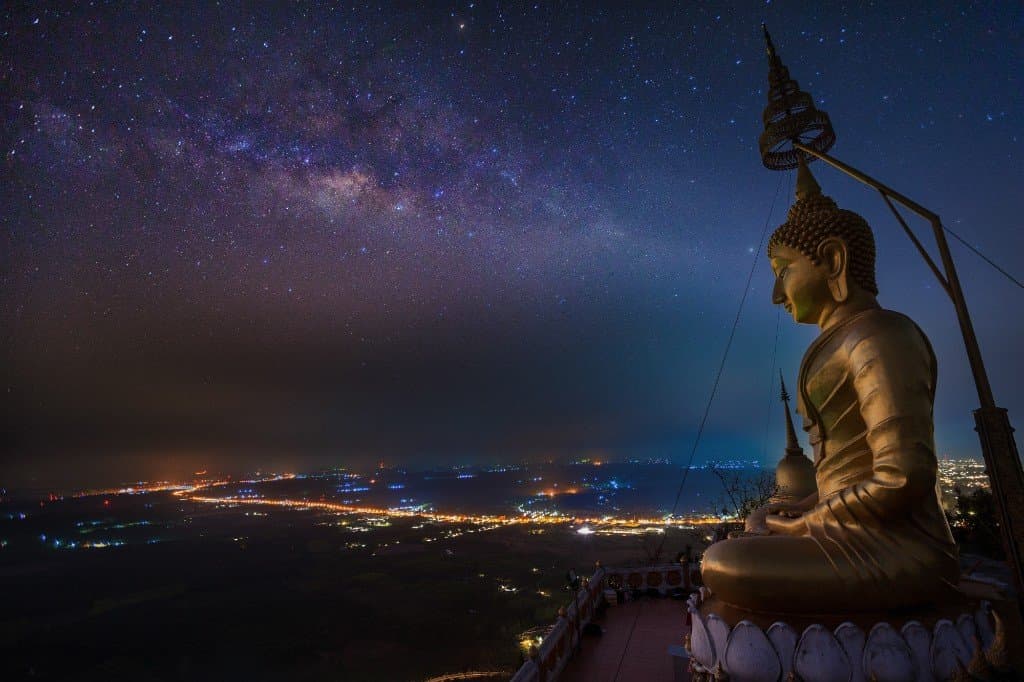
One of Krabi’s Most Famous Landmarks
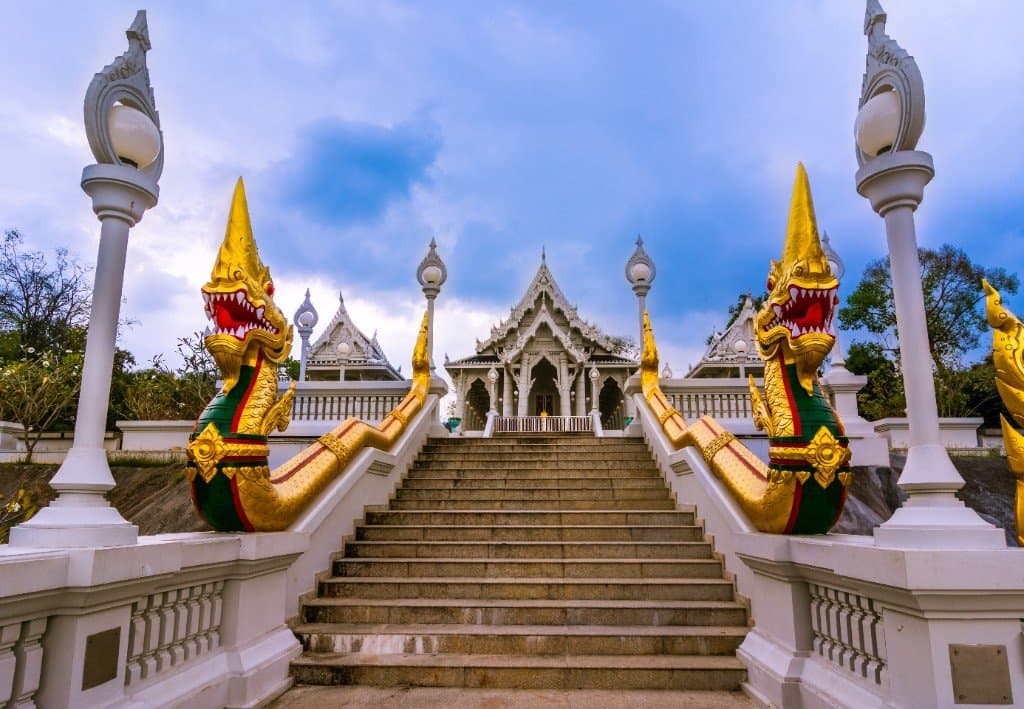
White-and-blue Buddhist temple in central Krabi Town with a famous golden Naga staircase — easy to reach by scooter from Ao Nang or on foot from Pak Nam.
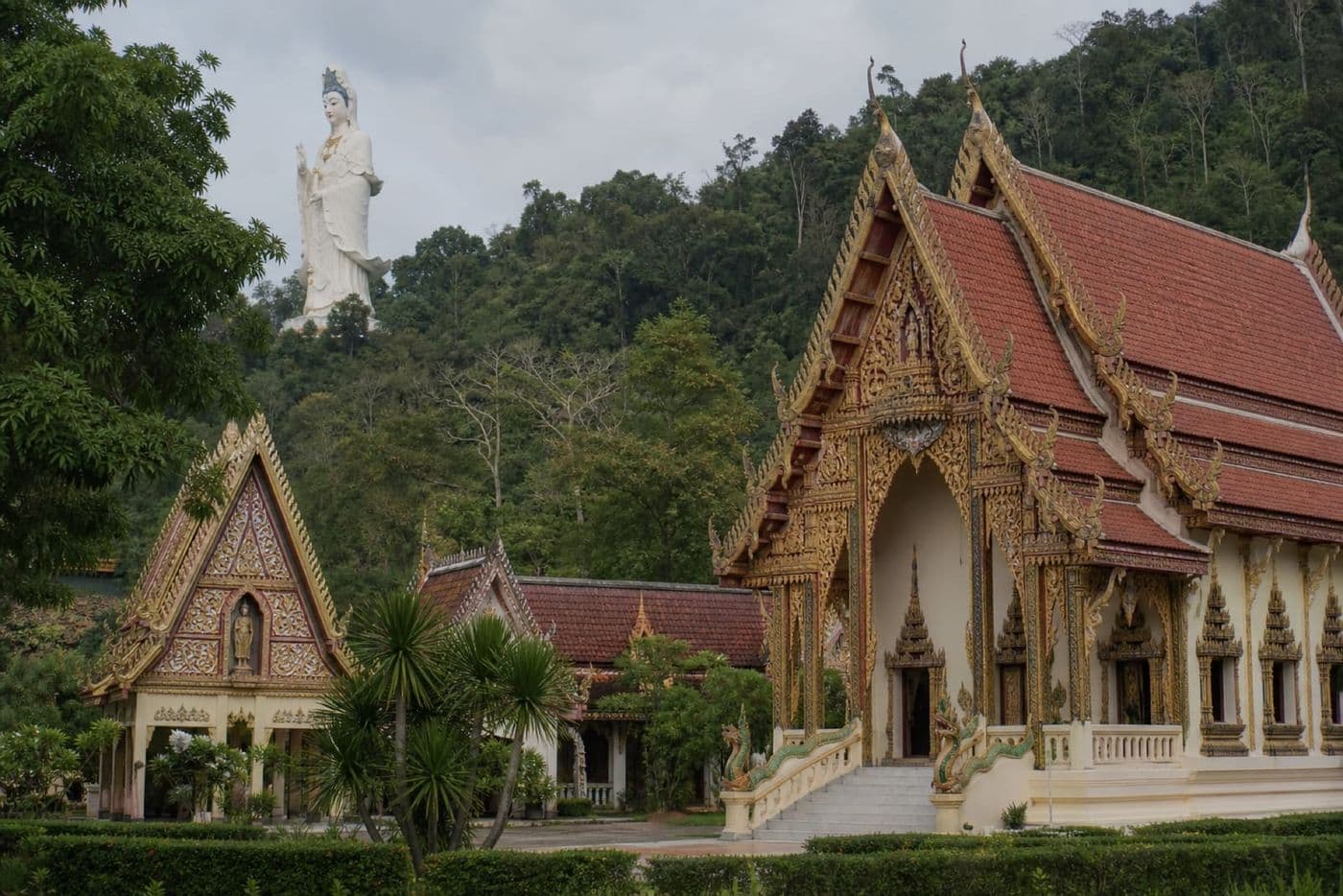
Hilltop temple on Khao Lan Mountain in Thap Put — boat-shaped ordination hall, golden Buddha, towering Guan Yin statue and panoramic views over Phang Nga.
